










How to Remove Pigmented Lesions - Expert Guide | CIELLULU
How to Remove Pigmented Lesions: A Professional Guide
Pigmented lesions, while common, can pose challenges in dermatological aesthetics and treatment. As professionals in the industry, understanding the most effective removal techniques is essential. This guide delves into proven methods and latest advancements to aid practitioners in their pursuit of excellence.
Understanding Pigmented Lesions
Pigmented lesions are areas of skin that exhibit a different color due to an increase in melanin. These can include freckles, sunspots, lentigines, and more complex conditions like melasma. Proper identification and understanding of these lesions are the first steps in determining the appropriate removal strategy.
Laser Treatment
One of the most effective and widely used methods for removing pigmented lesions is laser treatment. Different types of lasers, such as Q-switched lasers, are utilized depending on the lesion's nature and depth. They work by delivering intense light pulses that target and break down melanin, causing the lesion to gradually fade and disappear.
- Advantages: Precision, minimal scarring, and quick recovery.
- Considerations: Requires professional understanding of laser parameters and patient skin types.
Chemical Peels
Chemical peels involve applying a chemical solution to the skin, which exfoliates and eventually peels off, revealing less pigmented skin underneath. They are particularly effective for superficial lesions.
- Advantages: Non-invasive technique with adjustable depth and intensity.
- Considerations: Multiple sessions may be needed, and care must be taken to avoid complications like post-inflammatory hyperpigmentation.
Cryotherapy
Cryotherapy involves freezing pigmented lesions with liquid nitrogen, which destroys the pigment cells. It's often used for flat, well-defined spots like lentigines.
- Advantages: Quick and straightforward procedure with minimal downtime.
- Considerations: Risk of hypopigmentation or scarring if not applied correctly.
Intense Pulsed Light (IPL)
Though not a laser, IPL uses broad-spectrum light to target melanin. It is versatile and can treat a range of pigmentation issues with minimal discomfort.
- Advantages: Non-invasive and effective for large areas.
- Considerations: Requires careful assessment of the appropriate settings for different skin types.
Topical Treatments
While less immediate than other methods, topical treatments like hydroquinone, retinoids, and azelaic acid can gradually reduce pigmentation over time.
- Advantages: Non-invasive and can be combined with other treatments.
- Considerations: Requires patient compliance and regular follow-up for optimal results.
Choosing the Right Method
Selecting the right method depends on the lesion type, patient skin type, and desired outcome. A thorough patient consultation and examination lay the groundwork for a successful treatment plan. Collaboration with other professionals and ongoing education are key to staying at the forefront of pigmentation treatment advancements.
Conclusion
Removing pigmented lesions requires a blend of art and science, demanding precision, expertise, and understanding of each method's nuances. By leveraging advanced techniques and continuing education, professionals can enhance their practice and provide exceptional results for their patients.
At CIELLULU, we remain at the cutting edge of dermatological advancement, supporting professionals in delivering unparalleled care and innovation in pigmented lesion management.
What is an IPL Machine? Learn with CIELLULU
Professional Laser Hair Removal Machine Prices
Laser Hair Removal Guide
Comprehensive Guide to Picosecond Laser Tattoo Removal by CIELLULU
FAQs
What are the lead time and transportation modes?
According to quantity and production schedule, small quantities are usually 7-15 days, and large orders are generally 25-30 days. According to the customer's needs, land, ship, and air transportation are all available.
Can we accept a customized logo on the product and OEM packing?
Yes, OEM packing and printing logos are available.
Diode Laser
How does a diode laser work?
A diode laser works by emitting a concentrated beam of light through a semiconductor diode. This light is absorbed by the target material (such as hair follicles in hair removal treatments), causing it to heat up and achieve the desired effect, whether it’s cutting, heating, or destroying targeted cells.
What is a diode laser machine?
A diode laser machine is a type of laser that uses diodes as the light source to generate laser beams. These machines are commonly used in various medical, cosmetic, and industrial applications due to their precision and efficiency.
What are the common applications of diode lasers?
Hair Removal: Diode lasers are widely used for permanent hair reduction as they effectively target the melanin in hair follicles.
Skin Rejuvenation: They can treat skin conditions such as pigmentation, acne scars, and wrinkles.
Medical Procedures: Diode lasers are used in surgeries for cutting and coagulating tissue.
Industrial Uses: They’re also applied in welding, cutting, and engraving materials like metals and plastics.
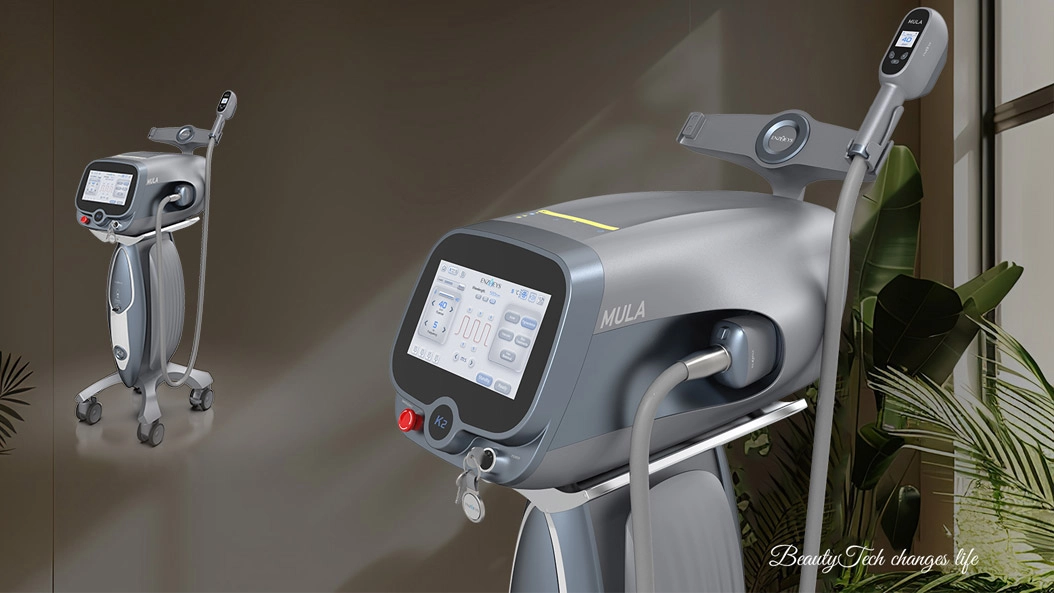
CIELLULU MULA K2 BroadBand Light DPL beauty machine for skin care and hair removal
ACNE/Pigmentation/Vascular Lesions Treatment, Skin Rejuvenation and Hair Removal.
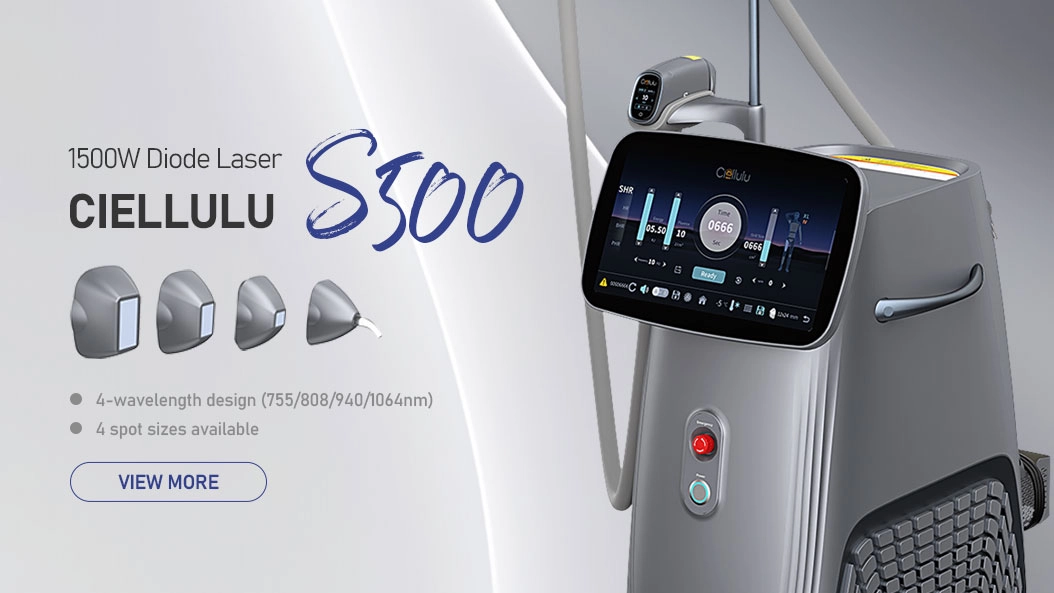
CIELLULU S500 1500W Diode Laser Hair Removal & Skin Rejuvenation Machine
Diode Laser Painless Hair Removal Machine is especially effective on hair follicle melanocytes without causing damage to the surrounding tissue.
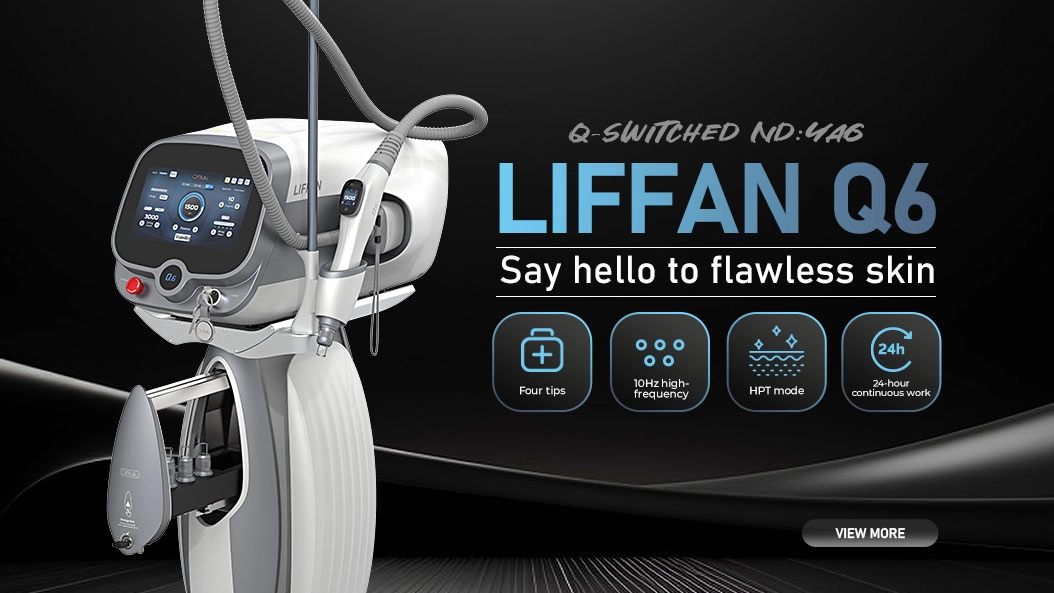
CIELLULU Q-Switched ND:YAG Laser LIFFAN Q6
Pigment Removal & Tattoo Removal & Skin Rejuvenation

Professional Consultation Team

Customized Solutions

24/7 Technical Support

Warranty and Maintenance Plans

Product Series
Contact us
• E-mail: service@probeautydevices.com
• Address: 11/F, HaiHua KeChuang Park, JingHu Road, Huadu District, Guangzhou, China.
Copyright © 2024 CIELLULU. | Privacy Policy • Terms and Conditions